
Alpha Binwani Capital: “The Houthis have gained unprecedented military autonomy by manufacturing weapons inside Yemen, with China-sourced equipment and parts fueling this expansion of their military-industrial complex, according to Yemeni officials, intelligence sources, shipping experts, UN reports, and customs data reviewed alongside recent seizures. Because most components are dual-use, the shipments skirt the UN arms embargo on the Houthis, and there’s no evidence the Chinese suppliers knew the final destination. The development raises the risk of a Houthi blockade of the Bab el-Mandeb, which—layered on existing Iran-US disruptions in the Strait of Hormuz—could further choke Red Sea traffic carrying roughly 12% of global seaborne trade”
‼️ 🏦 Federal funds futures now imply a 70.9% probability that the Fed will hike rates 25 basis points to 4.00%–4.25% at its Oct. 28 meeting, up sharply from 55.4% just a day earlier, as hawkish central bank commentary and fresh inflationary pressures pushed Treasury yields to new multi-year highs on Wednesday.
‼️ Fed Governor Michael Barr said Wednesday that further interest rate hikes will likely be needed, as inflation remains above the 2% target with risks to that goal rising even as labor market risks have eased; despite strong growth and a solid job market, he stressed that price stability is essential to sustaining durable, maximum-employment growth.
‼️ 🇮🇷 Iran’s President Masoud Pezeshkian told the UN General Assembly in New York that Tehran has no interest in building nuclear weapons but insists on its right to nuclear technology for economic development, adding that the issue can’t be settled militarily. He declared “no to nuclear weapons, and no to deprivation of nuclear knowledge,” while also warning that Iran won’t guarantee free passage through the Strait of Hormuz as long as it remains under sanctions
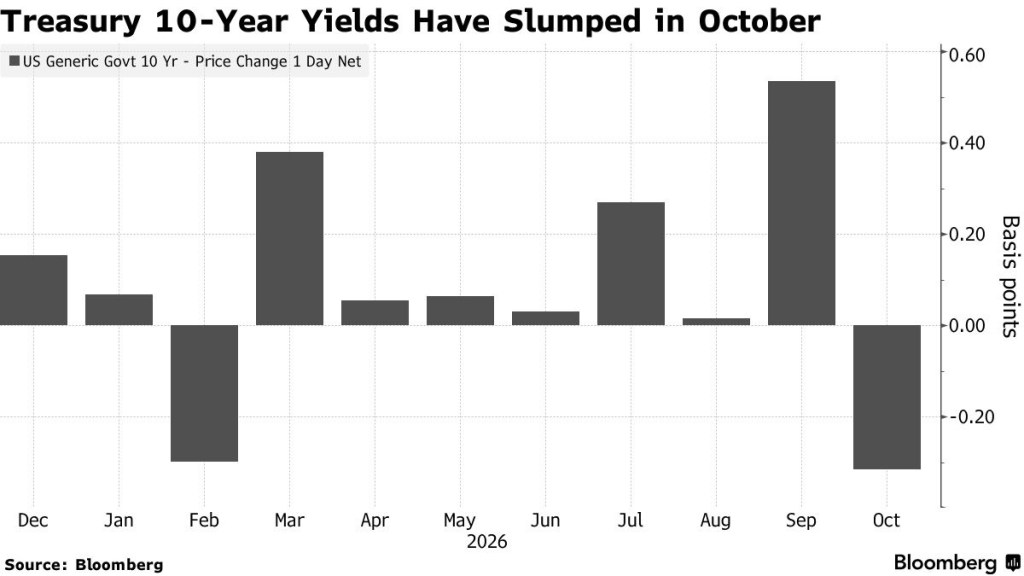
‼️ The 10Y just hit its highest level since 2023. The 30Y is at 5.35%, matching 2007. Treasury has tried intervention after intervention. None of it is working.
Short-term relief hinges on one thing: an end to the Iran War and the global energy crisis driving inflation expectations. That’s the lever policymakers don’t control.
Long-term, this isn’t a war problem — it’s a deficit problem. Years of compounding inflation and structural overspending built this yield curve, and no ceasefire fixes that.
The ultra-low-rate era isn’t coming back. Higher for longer isn’t a forecast anymore. It’s the baseline.