

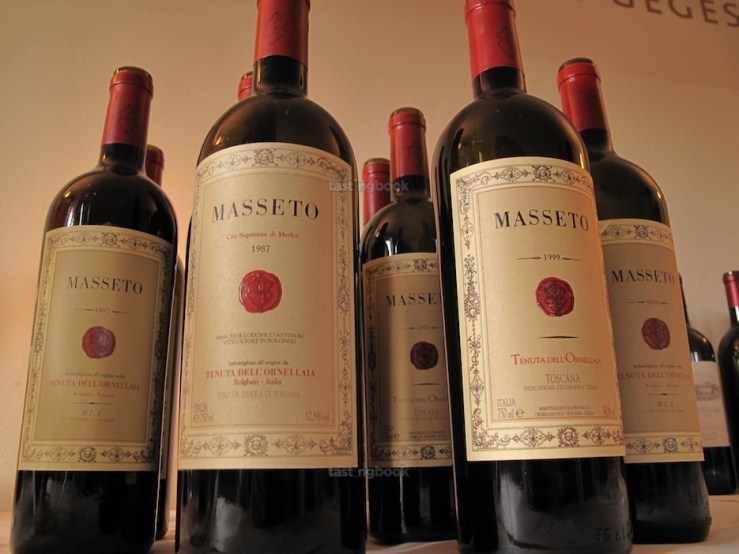
The Cult Wine Masseto 2014 has just been released and we see it yielding 5 percent per annum. The release price was at £4,200 for a case of 12 bottles. The two non Bordeaux cult wines leading the investment grade pack so far are Masseto and Opus One
According to trading data on the Liv-ex platform, every Masseto vintage for the last decade has increased in price in the past 12 months. But, going further back, there has been a small decline for the highly rated 2006 and 2001 vintages in the past six months
Monica Larner/The Wine Advocate: “The 2014 Masseto has developed beautifully over the past few years of its oak and bottle evolution. This is a very distinctive edition of the iconic Italian Merlot that delivers a silky and streamlined approach. As bold and opulent as Masseto is in the warm vintages, I personally find those wines difficult to finish because the extract, concentration and intensity are so over the top. The best vintages of Masseto usually overpower any food dish you put before them. This is a subdued and downplayed expression instead. The cool summer season has shaped fresh berry notes of wild blackberry and cassis with drying mineral, tobacco, licorice and tar. There is evident sweetness here in terms of the wine’s fruit flavors and its tannins, but there also is a cooling vein of acidity that makes the difference. The alcohol feels integrated and light. If you are hankering for a less massive and less muscular Masseto, this vintage is for you.” 94 Points. Drink Date: 2019-2035
Monica Larner/The Wine Advocate: “The 2013 Masseto paints a glorious picture of Tuscany. It captures an inspired moment in time and walks an impressive tightrope between power and elegance. In my preview tasting last year, I noticed the firm textural richness of the 2013 vintage and the crystalline sharpness of its aromas. Thanks to 12 additional months of bottle aging, that impression is evermore constant and concrete. The focus is there, yet the wine has also fleshed out and put on more velvety definition especially in terms of mouthfeel. It wears its pedigree with pride, but most importantly it offers the balance and integration to promise a long and healthy aging future. The 2013 vintage follows closely on the heels of the impeccable 2006 and 2010 vintages in terms of cellaring potential. This is definitely a bottle that should interest collectors.” 97 Points. Drink Date: 2018-2045
Terroir – Masseto Centrale: “Masseto Centrale, the central area of the vineyard, has the highest percentage of Pliocene clays. This terroir’s “signature “constitutes the most impressive section of the vineyard giving Masseto its very soul and backbone. It yields powerful and concentrated wines with imposing tannic structures.”
Vineyard: Where the Masseto vineyard now stands, there was once a coastal marsh, over which clayey deposits formed over the centuries, interlaying with “marine“ invasions that increased the salinity of the substrate. Indeed, in the epochs that followed, the clays were overlain by thick deposits derived from the erosion of the hills, which were then mountains, and in some cases volcanoes. These deposits comprised gravels, sands, and various kinds of clays and rock fragments. Shocks of the most violent kind known, earthquakes, folded the layers in the ground, and one of these folds uplifted the Pliocene clays, bringing them to the surface
Masseto Hill: Among the first people to realize the potential of the great terroir of the Masseto hill was the great Russian- American enologist, Andrè Thcelicheff, a man of great experience who contributed to the conception of Masseto in the early 1980s. Andrè Thcelicheff was a visionaire, combining knowledge and inspiration. He loved Merlot and immediately felt that Masseto Hill would, thanks to its characteristic terroir and unusual climate conditions, be a dream place for Merlot to express its beauty. Following his precious advise, the team at Masseto planted the vineyard and committed themselves to make, over the years, the dream come true
The mineral structure of the clays on the Masseto hill allows them to absorb and store at least their weight in water. A clayey terrain is therefore always cool. The ground must however be worked constantly, particularly in the summer, to obtain the ideal combination of factors the vines require: sun for the leaves, and water for the roots. Thus the grapes grow gradually, without stress, and with perfect ripening of the polyphenols under the best possible conditions
At the top of the Masseto hill, at an elevation of about 120 meters above sea level, the soils consist of loose clays and sand with many pebbles, which bless the wine with a marked elegance. This is the area definined as “Masseto Alto”. “Masseto Centrale” is the central part of the Masseto vineyard, which determines the soul and backbone of Masseto. With slopes of a 10% gradient, the high proportion of Pliocene clays defines the character of this terroir, providing power, concentration and tannic support, and therefore great character, structure and longevity. Finally, the lowermost rows grow on less clayey soils, giving the wine its breadth, softness, and generosity. This final area is called “Masseto Junior”. Within each of these three zones there are smaller areas that ripen differently and therefore require to be harvested at different times. Such a complex mosaic will naturally reflect in the wine by displaying great complexity and revealing multi-facet dimension
The layout of the vineyard rows is of vital importance. In the Masseto vineyard the rows are planted perpendicular to the direction of maximum slope in order to allow the water from the summer rains to penetrate slowly into the soil, rather than run off violently. The vines are pruned according to the monolateral cordon spur system, with the number of buds and yield varying considerably according to the vigor of the individual vines. Their development is further supported by the field hands, who prune 5-10% of the production to help the vines reach their optimum equilibrium

 AlgoTrader