

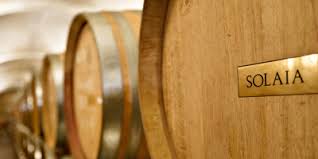
According to Liv-Ex, as of July 2017, The Solaia index – which tracks prices for the ten most recent physical vintages – was up 27.8% year-on-year. It has outperformed the Italy 100 index which was up 15.7% over the same period. Over the past twelve months the best-performing vintages have been the 2005 and 2006, up 45.8% and 44.2% respectively. The 2004 followed behind with a 29% increase. Of the eleven most recent physical vintages, the 2013 was the only one to fall in value. Since the wine’s wine’s release in Sep last year, its Market Price has dropped 1.4%. Solaia 2010 has one of the best performing wines of the Liv-Ex 100 index: its mid price has climbed 6.7%
The Solaia 2010 was released in Sep at €130 per bottle ex-negociant, equal to the 2013 and 2012 releases. It is being offered by the international trade at £1,620 per 12×75, an increase of 11.7% on the 2013 release
The Wine Advocate’s Monica Larner scored the wine 95 points. In her tasting note, she said “the wine delivers a sense of sheer excitement and nervousness that will subside with another few years of bottle age.” Larner adds that “Marchesi Antinori made 40% less Solaia this vintage in order to maintain the quality you taste here”
NOTE: Buyers looking for value might be interested in the 2009, which carries a higher score than the 2014, yet is available at a 14.8% discount: Antonio Galloni/Wine Advocate: “The 2009 Solaia is one of the clear standouts of the vintage. Freshly cut flowers, raspberries, spices, mint and licorice burst from the glass as this fabulous, viscerally thrilling wine shows off its pure class. Today the oak is a bit prominent, but that won’t be an issue by the time the wine is ready to drink. In one of my blind tastings, the 2009 Solaia was flat-out great. There is no shortage of pedigree here. The 2009 has calmed down a little from its youth, when it was a much more exuberant wine, and has now begun to close down in bottle. Solaia is 75% Cabernet Sauvignon, 20% Sangiovese and 5% Cabernet Franc from a single parcel within the Antinori family’s Tignanello vineyard. Longtime winemaker Renzo Cotarella has done a fabulous job with the flagships Tignanello and Solaia in 2009. In my blind tastings the pedigree of those two wines in particular came through with notable eloquence. The 2010 Tignanello and Solaia are both thrilling at this stage. They could very well turn out even better than the 2009s. Anticipated maturity: 2019-2029
Antinori’s Solaia, a more Cab-heavy blend than the rest of the Super Tuscan wines, was launched in 1978
How Was The Super Tuscan Born?
For years, the reputation of Italian wine outside Italy was characterized by mass-market exports like Chianti fiascos and Riunite, a sweet Lambrusco. Indeed, from the 1960s and into the 1970s, Italian wine was generally either excellent or rather poor. The greatest producers in Piedmont and Tuscany were crafting spectacular Barolo and Brunello, but many winemakers, particularly in Tuscany, were caught between the aristocratic and inflexible rigor of Brunello, and the sloppier definitions of Chianti, which allowed for a high percentage of white grapes, limited the percentage of Sangiovese, and forbade international varieties such as Cabernet Sauvignon or Merlot
Frustrated with these restrictions, a small group of would-be Chianti producers chose to craft wine to their taste and that of the growing international wine market, changing the course of Italian winemaking history in the process. While still not an official designation — most are officially classified as IGT [Indicazione Geographica Tipica] Toscana or Bolgheri DOC [Denominazione di Origine Controllata], classifications developed in the early 90s in response to their success — the ‘Super Tuscans’ are nonetheless among Italy’s most acclaimed and coveted wines, with names like Sassicaia and Ornellaia as recognizable among collectors as Screaming Eagle and DRC
Sassicaia was officially the first Super Tuscan. Its story began in the 1940s when Mario Incisa della Rocchetta planted Cabernet Sauvignon and Cabernet Franc vines on his estate in Bolgheri to test how the local, maritime Tuscan terroir would respond to classic Bordeaux varieties. The resulting wine was initially kept for private family use, but after years of encouragement from family and peers, the 1968 vintage of Sassicaia was released commercially in 1971. The same year, Antinori produced Tignanello, a Sangiovese-heavy blend which also included Bordeaux varietal
These wines were followed by such icons as Antinori’s Solaia, a more Cab-heavy blend launched in 1978, and Tenuta Dell’Ornellaia’s Ornellaia in 1985. Their success proved in many ways that the notion of terroir was fluid, that Tuscan hillsides weren’t restricted to Sangiovese and could in fact yield Cabernet as noble and high-toned as that of the Medoc
With the case for Cab having been convincingly made, Merlot came next in 1986 in the form of Masseto, a single-vineyard, site-specific 100 per cent Merlot from Tenuta Dell’Ornellaia. If Sassicaia and Solaia’s inspiration came from Lafite or Latour, Masseto could be seen to be a bold vision of Bolgheri’s own Pétrus — a sumptuous, silken wine of inimitable concentration and finesse (and the requisite hefty price tag). The long journey from straw-clad fiasco to single-vineyard specificity was complete
Top Super Tuscans For Investment
- 2013 Tenuta San Guido • Bolgheri Sassicaia (97 Points)/The Wine Advocate/Monica Larner: The 2013 Bolgheri Sassicaia is released 30 years after the death of Tenuta San Guido founder, Mario Incisa della Rocchetta, and in the same year that his son Nicolò celebrated his 80th birthday. This is a wine of excellent execution, beautiful balance and seamless intensity. The bouquet opens slowly to reveal delicate aromas of dark fruit and integrated spice that build in steady strength. That forward momentum, which is so specific to Sassicaia, is what ultimately brings us confidence in the wine’s remarkable ageing potential. The mouthfeel delivers freshness and power, but in measured doses, with long and silky persistence. The 2013 vintage should be set aside for ten more years. Anticipated Maturity: 2018-2040
- 1985 Tenuta San Guido • Sassicaia (100 Points)/The Wine Advocate/Monica Larner: Oddly enough, the 1985 Sassicaia was the wine least commented during the conversations that followed this retrospective. Our panel consisted of some two dozen professional wine tasters from around the world, and virtually not a word was uttered with regards to this wine. That’s how truly outstanding it is. The soaring beauty of this landmark Sassicaia literally transcends the rather mundane realm of wine critique with its string of adjectives and wearisome descriptors. It hardly deserves to be treated like any of the other gorgeous wines we tasted on this glorious day. In truth, the 1985 Sassicaia does reveal a new perspective onto its perfection each time you have the fortune to taste it. I noticed a layer of bright almond-like sweetness that I don’t recall tasting before. The wine seems to be getting younger, not older. Even its appearance is remarkable. Of the various samples presented from the 1980s, this wine exhibited the brightest garnet color and the most youthful personality. It shows stunning volume. The integration is seamless and the wine’s many complicated pieces fit together with utmost precision like a jigsaw puzzle that renders a most beautiful Italian masterpiece when admired at completion. Anticipated Maturity: 2017-2035
- 2010 Marchesi Antinori • Solaia (97 Points)/The Wine Advocate/Monica Larner: The 2010 Solaia puts on an incredible show that hits all the senses and keeps your unyielding attention for as long as there is wine in the bottle. There are various ways to describe the bouquet. First, is the wine’s sweet side, as this beautiful 75-20-5 blend of Cabernet Sauvignon, Sangiovese and Cabernet Franc delivers ripe cherry, black currant, baking spice and dark chocolate. After that, the wine becomes redolent of tobacco, balsam, bay leaf, rum cake and dark licorice. The bouquet is all encompassing and complete. A firmly structured backbone is padded generously by the fleshy richness of its consistency. This is a gorgeous wine that will age for decades. Anticipated Maturity: 2015-2040
- 2013 Marchesi Antinori • Solaia (97+ Points)/The Wine Advocate/Monica Larner: The best vintages of Solaia are 1990, 1994, 1997, 1999, 2001, 2004, 2007, 2010 and now 2013. Marchesi Antinori’s 2013 Solaia is a profound and meaningful wine that is based mostly on Cabernet Sauvignon with Sangiovese and Cabernet Franc in supporting roles. It sports a dark and thick texture with plump fruit and spice, grilled herb and black pepper. The bouquet is intense and layered with the kind of complexity that is best admired as the wine shifts and evolves in the glass. The textual impact is also impressive—you feel the inherent power and the structure, but these elements are never overdone. The best is yet to come; this Solaia is built for long cellar aging. Anticipated Maturity: 2018-2040
- 2010 Tenuta dell’Ornellaia • Ornellaia (97+ Points)/The Wine Advocate/Monica Larner: Poured from the special anniversary bottle, the 2010 Bolgheri Superiore Ornellaia is a truly outstanding wine that leaves a lasting memory for those who are lucky enough to enjoy it. What stands out is the absolutely seamless-seamless-seamless (yes, it’s worth repeating three times) integration of its many moving parts. The wine magically transitions from cherry, spice, chocolate and espresso in one melodic and continuous loop. It exudes balance and elegance over long, delicious minutes. It is profoundly impressive. Anticipated maturity: 2016-2030. Of all the grapevines planted on the Ornellaia estate, the 2010 vintage showed best results with Merlot, says Leonardo Raspini. Because the harvest was later than usual, the early-ripening grape enjoyed a slow and steady evolution. Anticipated Maturity: 2016-2030
- 2009 Tenuta dell’Ornellaia • Ornellaia (97 Points)/The Wine Advocate/Monica Larner: The 2009 Ornellaia caresses the palate with layers of seamless, radiant fruit. Sweet red berries, mocha, flowers, new leather and spices are some of the many notes that are layered in this sumptuous, totally beautiful wine. The 2009 stands out for its silky tannins and phenomenal overall balance. This is one of those wines that will probably enjoy a long drinking window. There is little question the ability to blend grape varieties was a huge help in this vintage. In my opinion, that is the main reason Ornellaia is a slightly more complete wine than Masseto in 2009. In one of my blind tastings, the 2009 made a very eloquent case for itself as the wine of the vintage. The blend is 55% Cabernet Sauvignon, 22% Merlot, 21% Cabernet Franc and 2% Petit Verdot. In 2009 winemaker Axel Heinz used the highest percentage of Cabernet Franc ever in Ornellaia and gave the wine less time in oak, both with the goal of preserving as much freshness as possible. Anticipated Maturity: 2014-2029
- 2008 Tenuta dell’Ornellaia • Ornellaia (97 Points)/The Wine Advocate/Monica Larner: The 2008 Ornellaia continues to blossom in the bottle. Dark cherries, chocolate, espresso, blackberries and mocha are just some of the many notes that explode from the glass. A rich tapestry of licorice, tar and camphor notes develop in the glass, adding considerable complexity. The 2008 is a huge, structured Ornellaia endowed with massive structure. It has come together beautifully since the early days when it was a tannic beast. Readers who can be patient will be rewarded with a spectacular bottle of wine. This is a fabulous showing. Anticipated Maturity: 2018-2033
- 2006 Tenuta dell’Ornellaia • Ornellaia (97 Points)/The Wine Advocate/Monica Larner: The 2006 Ornellaia flows from the glass in a profound expression of ripe, dark fruit. With time in the glass layers of minerals, cassis, tar, sweet herbs and French oak emerge, adding further complexity. This harmonious Ornellaia combines the richness of the vintage with superb freshness and awesome balance. Today the wine’s sheer density almost manages to hide the tannins, but they are there, and the wine will ultimately benefit from a few years in the cellar. The 2006 Ornellaia is one of the highlights of this sensational Tuscan vintage. Anticipated Maturity: 2016-2026
- 2013 Marchesi Antinori • Tignanello (96 Points)/The Wine Advocate/Monica Larner: The 2013 Tignanello represents the beginning of a new chapter for Italy’s ultimate game-changer wine. The blend remains 80% Sangiovese with 15% Cabernet Sauvignon and 5% Cabernet Franc but Renzo Cotarella tells me “stylistically-speaking, this is what we wanted to achieve.” The winemaking formula remains the same, but one of the major differences and benefits to this wine is vineyard age. The celebrated Tignanello single vineyard is now reaching 15 years old. In other words, it is in its production prime. This is a harmonious and beautifully integrated wine that reveals black fruit and baking spice. I’m told the 2014 Tignanello will have a greater percentage of Cabernet Sauvignon and the 2015 vintage will have more Sangiovese. Anticipated Maturity: 2018-2035
- Peak Prosperity Consulting Presents Oenophile: The Investment Grade Wine Fund. Aim: 5%-10% Per Annum. Provenance & Auction: London. Details: inquiries@ppchk.net

 AlgoTrader