

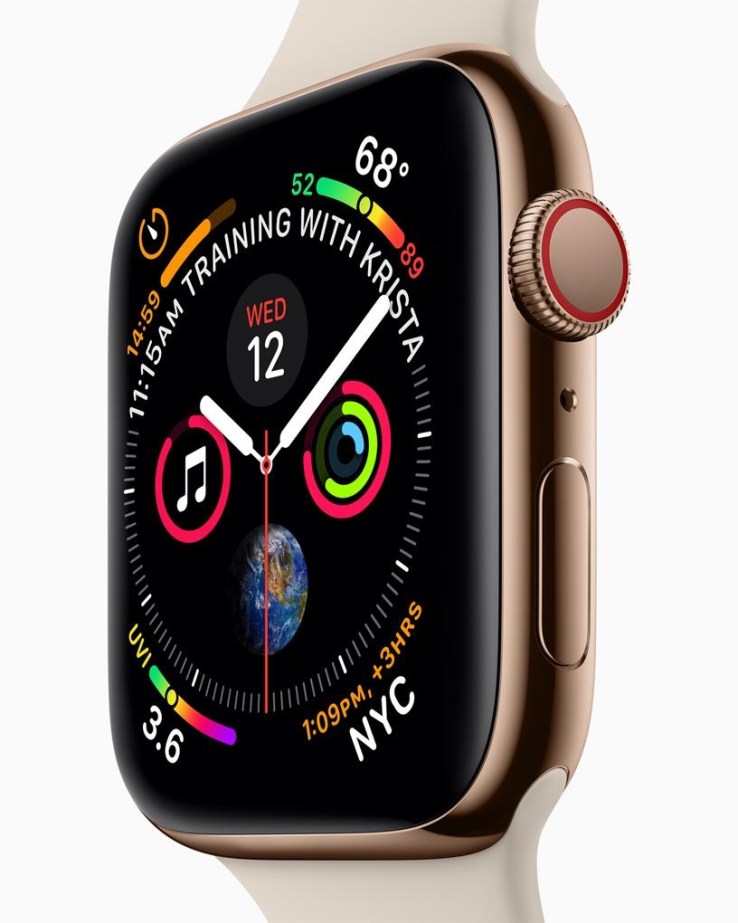
Apple Could Save You From A Stroke: On the company’s earnings call, Tim Cook said that revenue from wearables (a business that includes the Apple Watch and AirPods) was up more than 50% • EMarketer: “This is the first time since 2013 where iPhones did not account for the majority of Apple’s revenue in a quarter,” eMarketer: “Apple is trying to get more money from existing iPhone owners by promoting new services. That’s working, but the most promising number may be the wearables figure, likely representing strong growth in sales of Apple Watch and AirPods.” • According to Bank of America Merrill Lynch strategist Mary Ann Bartels and team, Apple is second-largest holding in U.S. exchange-traded funds to the tune of $57 billion invested in 241 ETFs • There’s an ECG app exclusive to the Series 4 Apple Watch that can indicate whether your heart rhythm shows signs of atrial fibrillation (AFib) — the most common type of irregular heartbeat and a major risk factor for stroke — and the irregular heart rhythm notification (for all Apple Watches) which will alert you of irregular heart rhythms suggestive of AFib • Sales research from the NPD Group shows that adults aged 18 to 34 are buying smartwatches more than any other age demographic. And EMarketer predicted that in 2019 consumers aged 25 to 34 will remain the largest group to purchase wearables • The CDC estimates AFib affects somewhere between 2.7 million and 6.1 million Americans, but the majority of those people are over the age of 65 • The Apple Watch has, on multiple occasions, alerted people both young and old about heart issues they didn’t know existed • The American Heart Association and the American Stroke Association has found that screening for AFib in the primary-care setting among people older than 65 years of age using pulse assessment followed by ECG, if warranted, can be useful • The Apple Watch Series 4 able to check your heart rhythms, or the electrical impulses that coordinate your heartbeat, for any irregularities. Occasionally throughout the day — about every two hours, depending on your activity levels — the Apple Watch will check your heart rhythms, looking for arrhythmia, which occurs if these impulses don’t work properly, causing your heart to beat too fast, too slow or irregularly. If the Apple Watch detects signs of an irregular rhythm five out of six times in a row within 48 hours, you’ll receive an irregular rhythm notification • The Apple Watch can also detect possible AFib via its ECG app. This feature replicates a single-lead ECG with a titanium electrode in the watch’s Digital Crown and a layer of chromium silicon carbon nitride on the back of the watch. When you place your fingertip on the electrode, it creates a closed circuit from finger to heart to wrist and allows the watch to record the electrical impulses that make your heart beat • We are able to Buy AAPL shares 10% Below Market • PM Us For Details • Email Now To Access Our Next AAPL Algo Trade Alert: inquiries@ppchk.net

 AlgoTrader