‼️ Trump told Axios he is nearing a decision on whether to resume attacks aimed at “annihilating” Iran’s regime, ahead of meeting Gulf leaders at next week’s UN General Assembly. JPMorgan says the war’s endgame is increasingly unpredictable, while the White House plans to sell Saudi Arabia up to 48 F-35s in a deal worth as much as $24.3 billion.
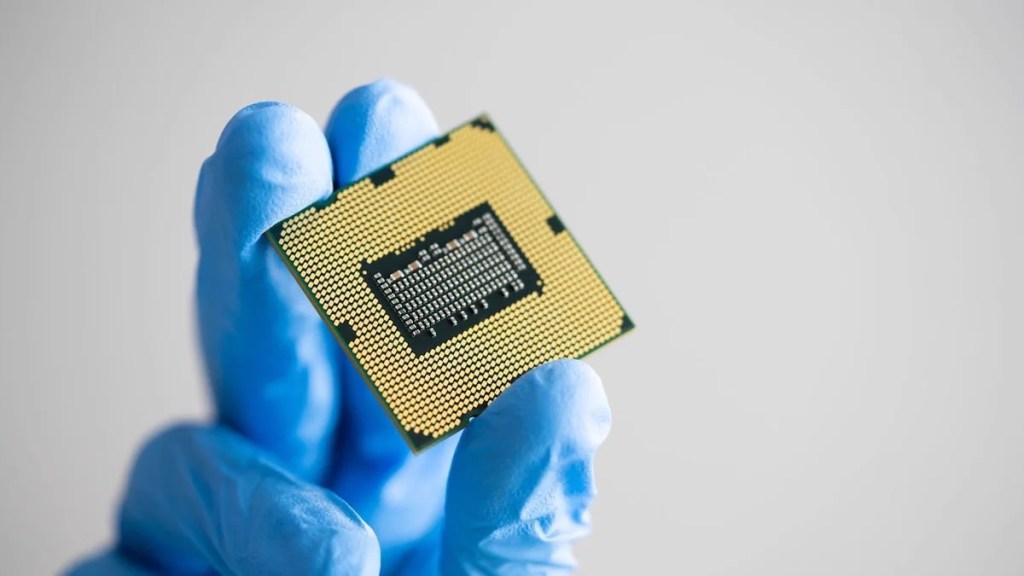
Alpha Binwani Capital: “Micron’s rebound above $975 suggests Monday’s Anthropic-led selloff was a positioning-driven overreaction rather than a break in the memory-cycle thesis. Investors initially interpreted AI-safety warnings as a threat to frontier-model development and, by extension, AI data-centre demand, but calls for stronger alignment, testing and oversight are not the same as reduced spending on training clusters, servers or high-bandwidth memory. Micron’s fundamental case remains tied to the physical constraints of AI infrastructure—rising HBM and DRAM content per accelerator, supply discipline and a tightening memory market—not to a single policy debate. For the bearish view to become fundamental rather than narrative-driven, investors would need to see tangible evidence of hyperscalers or AI labs cutting capex, delaying cluster deployments, reducing accelerator orders or scaling back memory purchases; so far, none has emerged” Micron #MU #ArtificialIntelligence #AIInfrastructure #HBM #HighBandwidthMemory #DRAM #Semiconductors #MemoryChips #DataCenters #Hyperscalers #AIStocks
Alpha Binwani Capital: “If the Iran war remains unresolved, the BoE may be forced to raise rates in November—not to lower oil prices, but to stop higher fuel, utility and import costs from feeding into wages, services inflation and household expectations. The UK is especially vulnerable because energy costs pass quickly into household bills and higher imported-energy and goods prices can worsen its terms of trade. While traders have slightly pared back near-term hike bets, they still expect tightening eventually, with markets recently implying about an 80% probability of a 25-basis-point November increase and roughly 47 basis points of total tightening by year-end. Goldman Sachs expects a November hike, while Citi sees one move later in 2026 followed by another in early 2027”
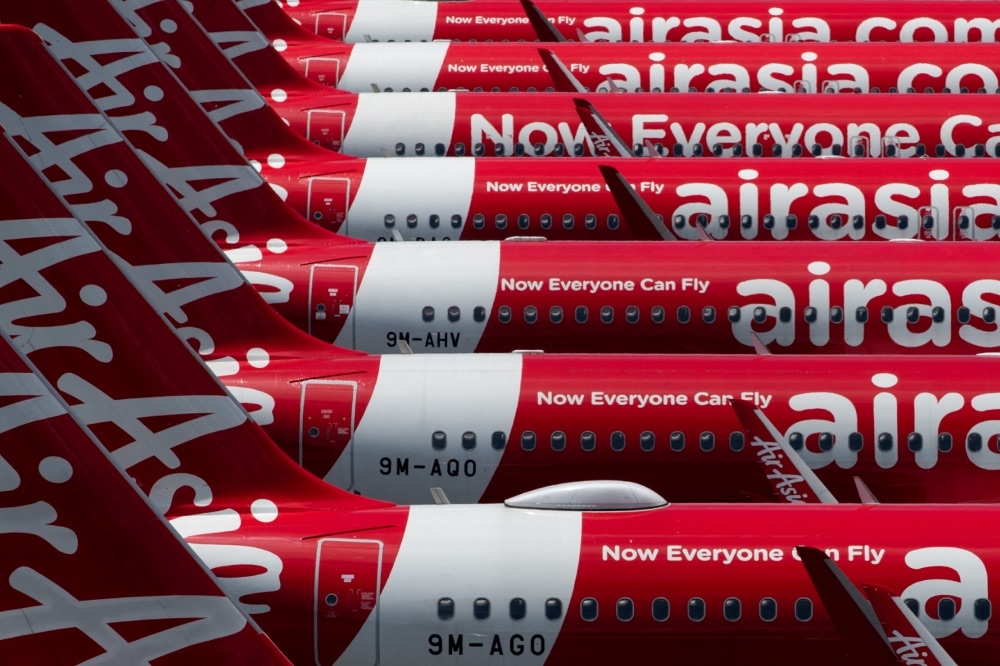
‼️ ✈️ 🇲🇾 Malaysia’s government has asked Malaysia Airlines and Batik Air if they can absorb AirAsia’s domestic market share, with discussions intensifying in recent weeks.
Alpha Binwani Capital: “AirAsia faces elevated financial-distress risk, though bankruptcy is not the most likely near-term outcome if it completes its planned US$1 billion international fundraising and RM700 million local facilities. The core challenge is liquidity rather than demand: as at 30 June 2026, it had RM954 million in cash against RM18.4 billion of current liabilities, including RM3.13 billion of borrowings and RM13.3 billion of lease liabilities, while reporting a RM527.2 million second-quarter net loss and RM582 million of negative operating cash flow in the first half. Higher fuel costs, currency weakness and debt servicing could create a self-reinforcing cycle of losses, cash burn and costly refinancing. Management aims to replace pandemic-era debt with longer-dated, lower-cost funding, supported by AirAsia X’s assumption of roughly RM3.8 billion in debt through the airline-asset consolidation. Bankruptcy risk would rise sharply if fundraising is delayed or punitive, fuel and FX pressures persist, operating cash flow remains negative, capacity is materially reduced, or government contingency measures become operational intervention. For shareholders, the more immediate risk may be severe dilution through discounted equity, convertibles or debt-to-equity conversions rather than an outright liquidation”
‼️ 🇮🇳 🧠 Applied Materials will invest $5 billion in India over the next decade to expand R&D, strengthen the semiconductor ecosystem, and develop talent
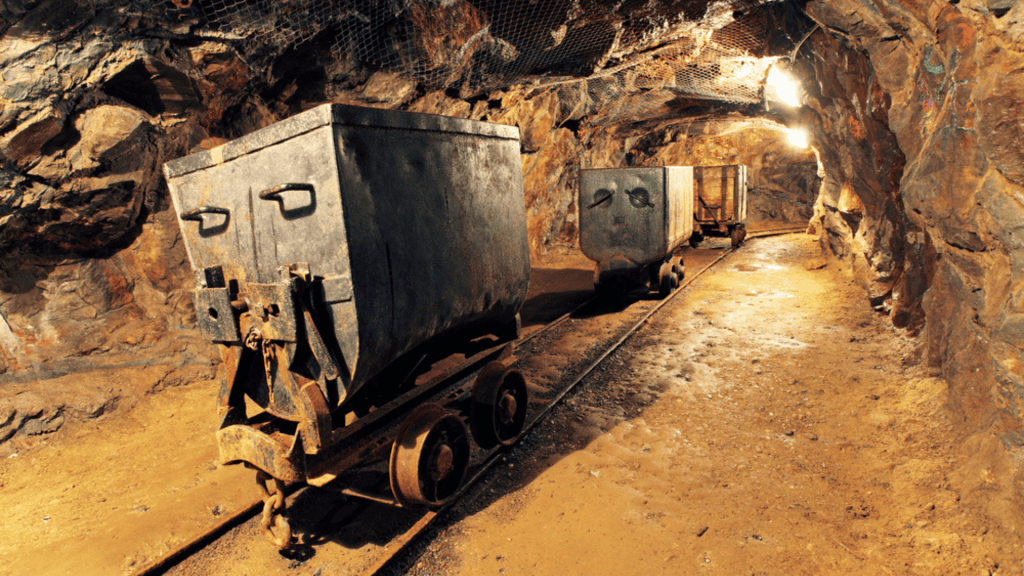
📌 Update: Copper producers provide investors with a leveraged claim on a strategically vital metal needed for grid expansion, electrification and data-centre power demand, at a time when new mine supply is costly, slow and increasingly difficult to deliver. The IEA estimates that existing and announced projects would satisfy only about 75% of 2035 copper requirements under its stated-policy scenario, implying a 25% supply gap and roughly USD 310 billion of required mining and refining investment through 2040. Established producers are therefore advantaged by scarce, hard-to-replicate assets—permitted deposits, operating infrastructure, skilled workforces, water access, logistics and social licences—while long development timelines limit the industry’s ability to respond quickly. Unlike physical copper, miners also offer operating leverage: a 15% rise in copper prices can translate into disproportionately higher EBITDA, free cash flow and equity value if costs rise only modestly. With ICSG cutting its 2026 mine-supply growth forecast to 1.6% amid weaker expectations for Chile, the DRC and Indonesia, diversified producers with brownfield expansion potential stand to benefit most
📌 For high‑net‑worth capital, we prioritize engineered performance over marketing:
🔴 $250K+ | 5 years – Targeted: 0.5% monthly income plus 15% annually.
🟡 $100K+ | 2 years – Targeted: 0.5% monthly income plus 11% annually.
🟠 Below $100K | 4 years – Fixed 9% annual return, designed to outperform typical market benchmarks