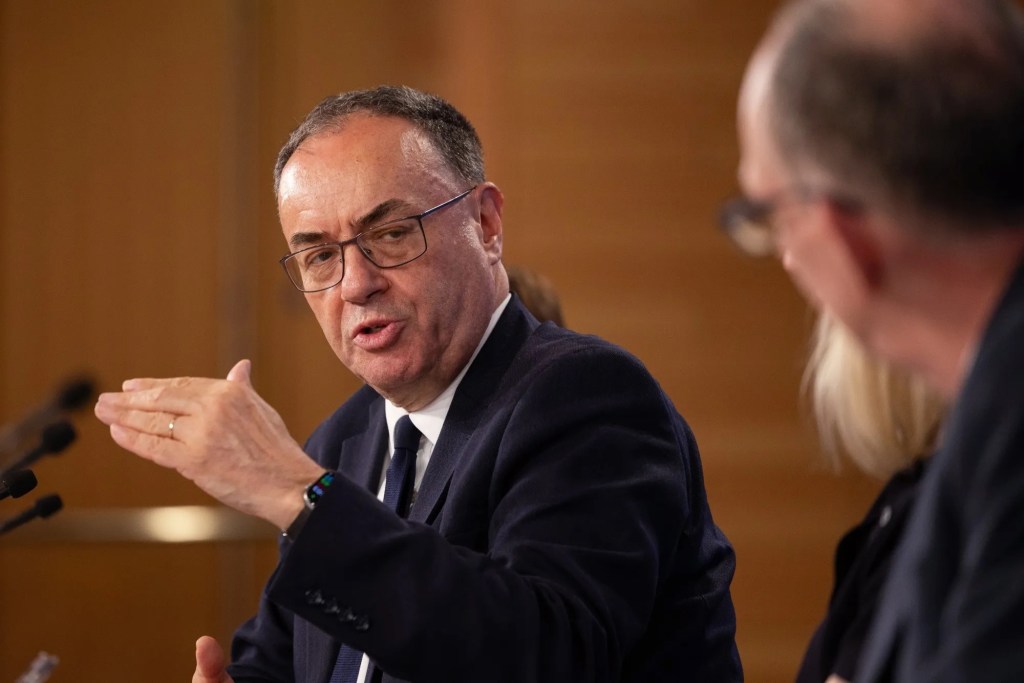
‼️ 🇬🇧 Bank of England Governor Andrew Bailey warned that resisting pressure to raise rates will get harder the longer high oil and gas costs persist, noting the energy shock’s pass-through has been “quite subdued” so far but that officials can’t wait for second-order inflation effects to emerge — comments that echo growing MPC concern over the prolonged US-Iran war, with Deputy Governors Clare Lombardelli and Sarah Breeden also signaling openness to a hike, as traders now price a near-90% chance of a quarter-point rise and at least three more within 12 months.
📌 Update: Our long/short strategy isn’t about beating the market — it’s about keeping more of what you already made while staying invested through volatility, combining tax-aware concentration hedging with dispersion capture that’s made this one of the fastest-growing categories among family offices and RIAs serving HNW clients. With Man Group upgrading long-biased and market-neutral equity long/short to positive for 2026, and Franklin Templeton flagging rising intra-market dispersion as leadership broadens beyond the narrow AI cohort, conditions now specifically reward stock selection over broad index exposure — meaning purely long-beta portfolios ride index-level risk with no offset, while a long/short sleeve captures the winners, profits from shorting the laggards, and insulates against broad drawdowns without sacrificing stock-picking alpha. For investors sitting on concentrated gains or facing a heavy capital-gains year, the question isn’t whether this overlay makes sense — it’s whether they can afford to keep ignoring it.
📌 For high‑net‑worth capital, we prioritize engineered performance over marketing:
🔴 $250K+ | 5 years – Targeted: 0.5% monthly income plus 15% annually.
🟡 $100K+ | 2 years – Targeted: 0.5% monthly income plus 11% annually.
🟠 Below $100K | 4 years – Fixed 9% annual return, designed to outperform typical market benchmarks